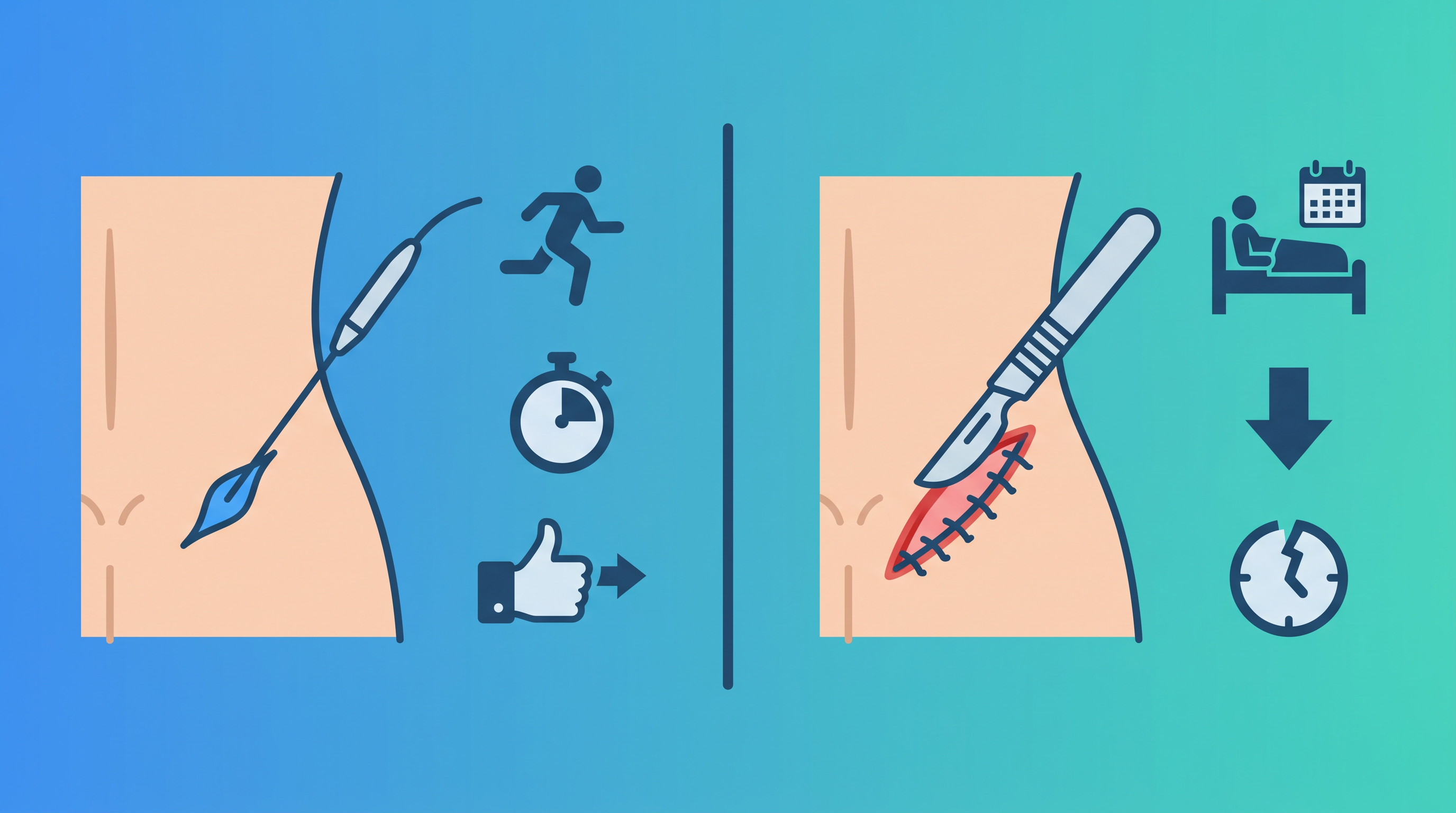
Flap Surgery for Pilonidal Sinus: A Complete Guide
Flap surgery represents the most advanced surgical option for pilonidal sinus disease, specifically designed for complex, recurrent, or large-area disease.
What is Flap Surgery?
Flap surgery involves excising the entire sinus tract and then reconstructing the defect using a flap of nearby healthy tissue. The key innovation is that it moves the scar away from the natal cleft midline — the area most prone to hair penetration and recurrence.
Two Main Techniques
Karydakis Flap
Excises the sinus tract with an elliptical incision; creates a flap from one side; advances the flap across the midline; closes the wound off-midline.
Limberg Flap (Rhomboid Flap)
Uses a rhomboid excision pattern; rotates a rhomboid flap of skin to fill the defect; closes with the scar positioned away from the midline.
Flap Surgery vs Other Treatments
| Factor | Laser | Open Surgery | Flap Surgery |
|---|---|---|---|
| Hospital stay | Day care | 1–2 days | 2–3 days |
| Return to work | 3–5 days | 2–4 weeks | 2–3 weeks |
| Success rate | 99% | 99% | 97% |
| Recurrence rate | 1–5% | 5–15% | 2–5% |
| Cost | ₹50,000–₹80,000 | ₹40,000–₹70,000 | ₹80,000–₹1,50,000 |
When is Flap Surgery Needed?
Flap surgery is recommended for recurrent pilonidal sinus, complex multi-tract disease, large tissue defect, deep natal cleft, or failed previous surgery.
Book a consultation to discuss whether flap surgery is the right option for your case.