
Pilonidal Sinus Recovery Guide
Complete timeline and instructions for optimal healing after laser treatment
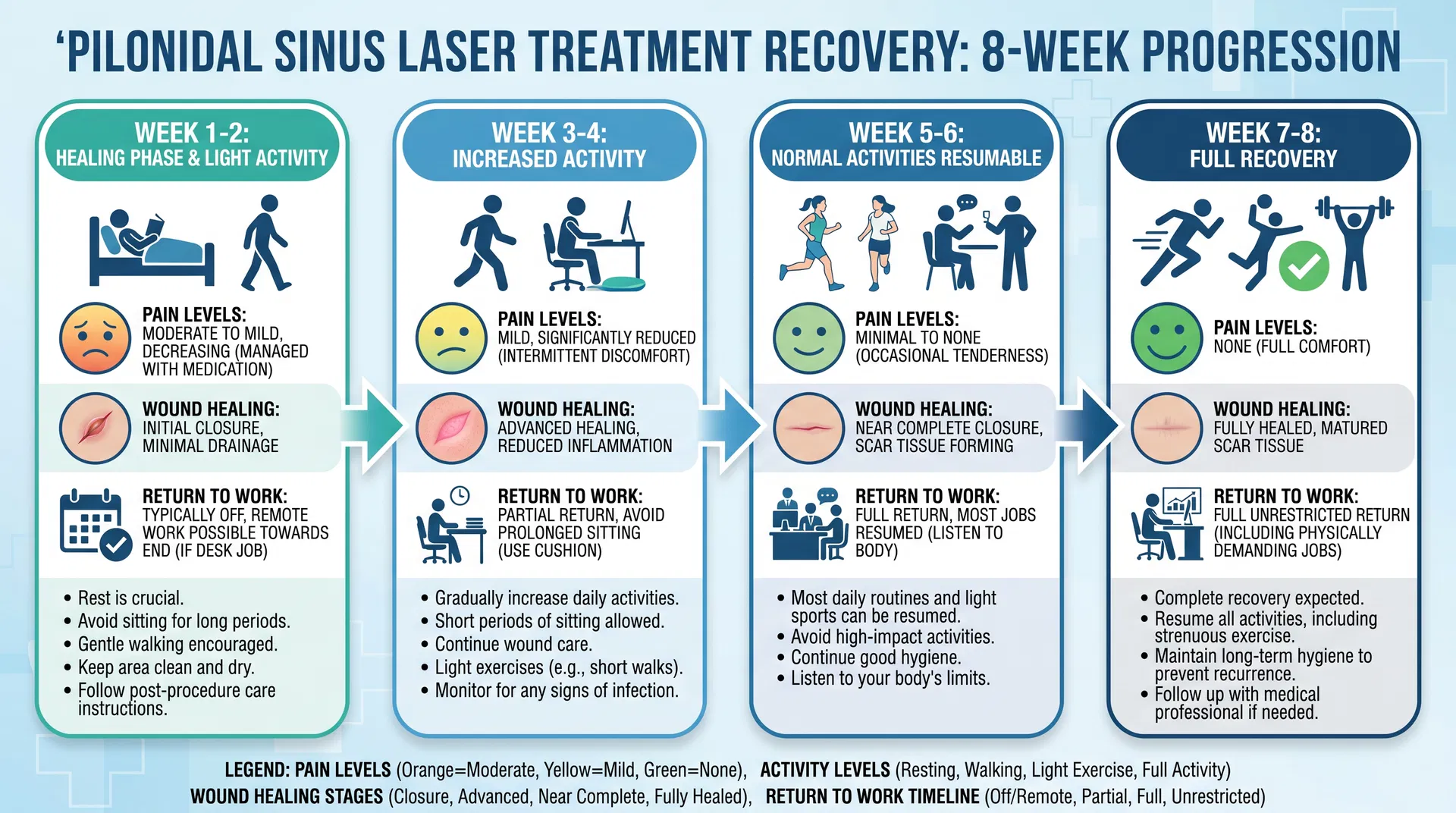
Medical infographic: 8-week recovery timeline for laser treatment showing pain progression, activity levels, and healing stages
Detailed Recovery Phases
What to Expect
- • Minimal pain (usually managed with local anesthesia effects)
- • Small amount of discharge or bleeding
- • Mild swelling around the treated area
- • Slight discomfort while sitting
Activity Level
Rest at home, avoid strenuous activity
Care Instructions
- • Keep the area clean and dry
- • Change dressings as instructed
- • Take prescribed antibiotics
- • Avoid sitting directly on the treated area
- • Use cushion for support if needed
What to Expect
- • Pain significantly reduced
- • Swelling starts to decrease
- • Able to sit with minimal discomfort
- • Discharge may continue but should reduce
Activity Level
Light activities, desk work acceptable
Care Instructions
- • Continue dressing changes
- • Gentle wound cleaning
- • Avoid heavy lifting
- • No strenuous exercise
- • Continue antibiotics if prescribed
What to Expect
- • Minimal to no pain
- • Wound healing progressing well
- • Discharge mostly stopped
- • Can sit comfortably for extended periods
Activity Level
Return to normal activities, light exercise
Care Instructions
- • May reduce dressing frequency
- • Continue gentle wound care
- • Can resume light walking
- • Avoid swimming and hot baths
- • Maintain good hygiene
What to Expect
- • Wound mostly healed
- • No pain or minimal discomfort
- • Can resume all normal activities
- • Return to work fully
Activity Level
Full recovery, all activities allowed
Care Instructions
- • Stop dressing changes if healed
- • Can shower normally
- • Resume exercise and sports
- • Maintain good hygiene
- • Attend follow-up appointment
What to Expect
- • Complete wound healing
- • Scar formation and maturation
- • Scar becomes less noticeable
- • Return to all activities including swimming
Activity Level
Complete normal life
Care Instructions
- • Maintain good hygiene
- • Keep area clean and dry
- • Use sunscreen on scar if exposed
- • Attend final follow-up if needed
- • Report any concerns immediately
Activity Restrictions by Week
| Activity | Week 1 | Week 2 | Week 3-4 | Month 2+ |
|---|---|---|---|---|
| Sitting | Limited | Moderate | Full | Full |
| Walking | Light | Moderate | Full | Full |
| Exercise | None | Light | Moderate | Full |
| Sports | None | None | Light | Full |
| Swimming | No | No | No | Yes |
| Work | Desk Only | Full | Full | Full |
Pain Management
Pain Relief
- • Paracetamol 500mg (if needed)
- • Ibuprofen 400mg (if needed)
- • Stronger pain relief if prescribed
Antibiotics
- • Take as prescribed
- • Complete full course
- • Do not skip doses
Home Remedies
- • Ice packs (first 48 hours)
- • Warm compress (after 48 hours)
- • Elevation of affected area
- • Proper cushioning while sitting
Wound Care Instructions
Daily Cleaning
- Wash hands thoroughly before touching the wound
- Gently clean with sterile saline or prescribed solution
- Pat dry with clean, sterile gauze
- Apply prescribed ointment if instructed
- Cover with fresh sterile dressing
What to Avoid
- • Do not soak the wound in water for first 2 weeks
- • Avoid swimming until fully healed
- • Do not use harsh soaps or chemicals
- • Avoid tight clothing over the wound
- • Do not pick at scabs or discharge
Diet Recommendations
- • Protein-rich foods (chicken, fish, eggs)
- • Fruits and vegetables (vitamin C)
- • Whole grains and fiber
- • Zinc-rich foods (nuts, seeds)
- • Plenty of water (stay hydrated)
- • Herbal teas
- • Spicy foods (first week)
- • Alcohol (interferes with healing)
- • Smoking (delays healing)
- • Processed foods
- • Excessive sugar
- • Caffeine (limit intake)
When to Call Your Doctor
Seek immediate medical attention if you experience:
- Fever above 101°F (38.3°C)
- Excessive bleeding or pus discharge
- Increasing redness, swelling, or warmth
- Severe pain not relieved by medication
- Signs of infection (bad odor, pus)
- Allergic reactions to medications
Questions About Your Recovery?
Contact Dr. Adarsh Patil's clinic for any concerns or questions during your recovery.
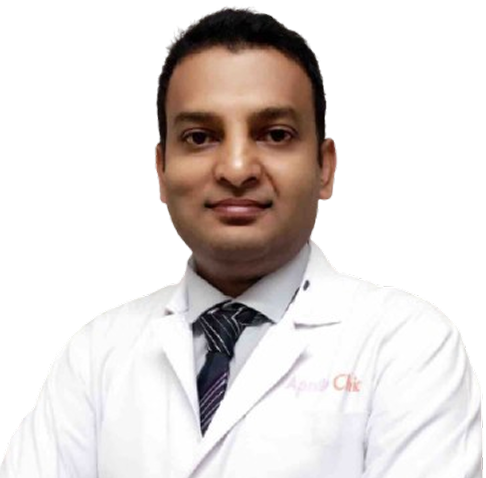
Dr. Adarsh M. Patil
MS, FMAS — Pilonidal Sinus Specialist, Bangalore
Consult Dr. Adarsh M. Patil — Pilonidal Sinus Specialist
Discuss laser and surgical options, likely recovery, costs, and next steps after an individual assessment.