The Science Behind Laser Treatment for Pilonidal Sinus
Laser treatment for pilonidal sinus — specifically FiLaC (Fistula-tract Laser Closure) and SiLaC (Sinus Laser Closure) — represents the most significant advance in pilonidal sinus treatment in the past two decades.
How FiLaC/SiLaC Works
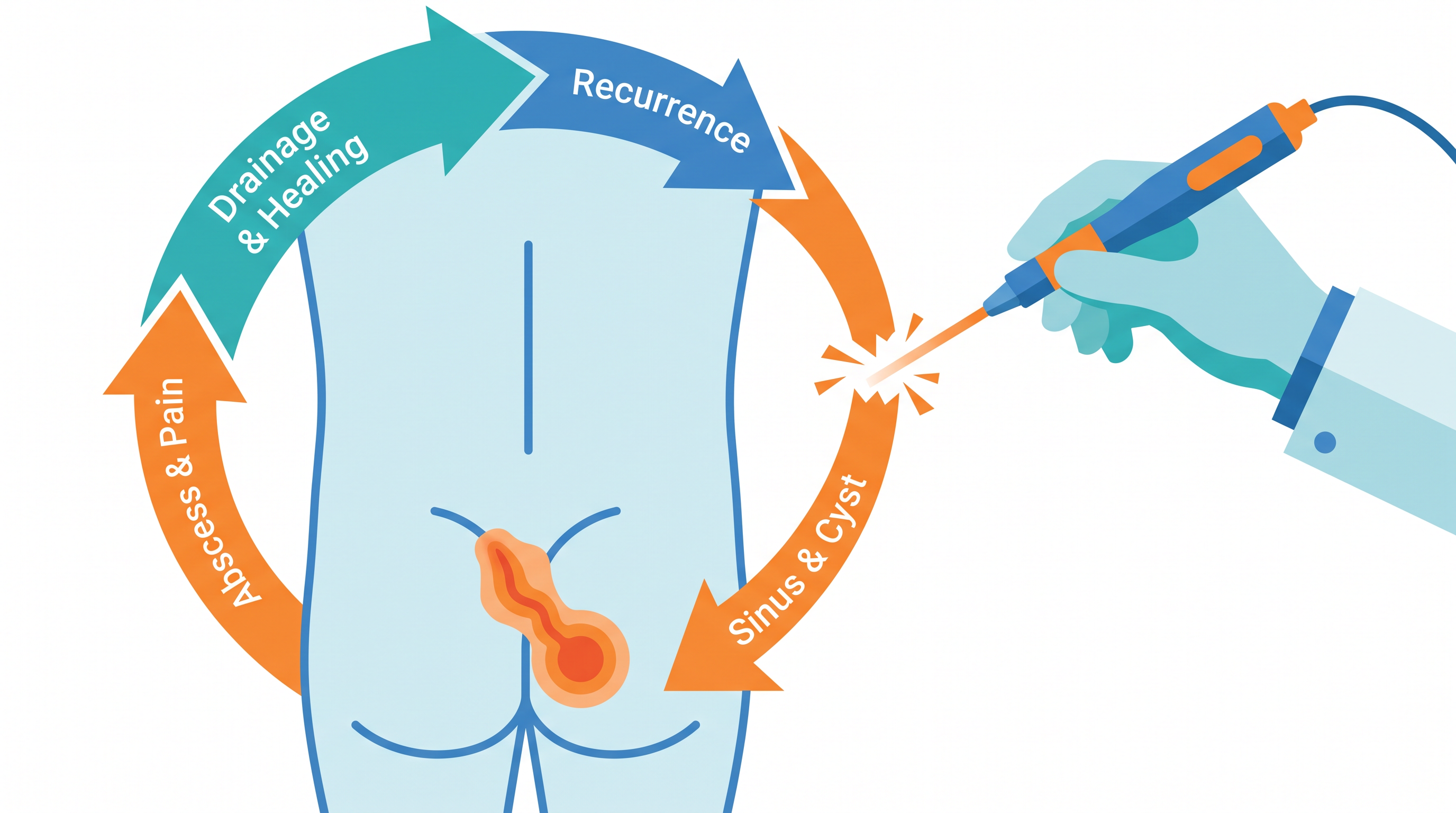
The laser fibre emits energy in a 360° radial pattern. When inserted into the sinus tract and slowly withdrawn, it ablates the epithelial lining, seals the tract, preserves surrounding tissue, and stimulates healing.
The Evidence
Success rates:
- FiLaC: 87–99% primary healing rate
- Open excision: 85–99% (highly variable)
Recurrence rates:
- Laser treatment: 1–5% at 12 months
- Open excision (open wound): 10–15% at 12 months
Recovery time:
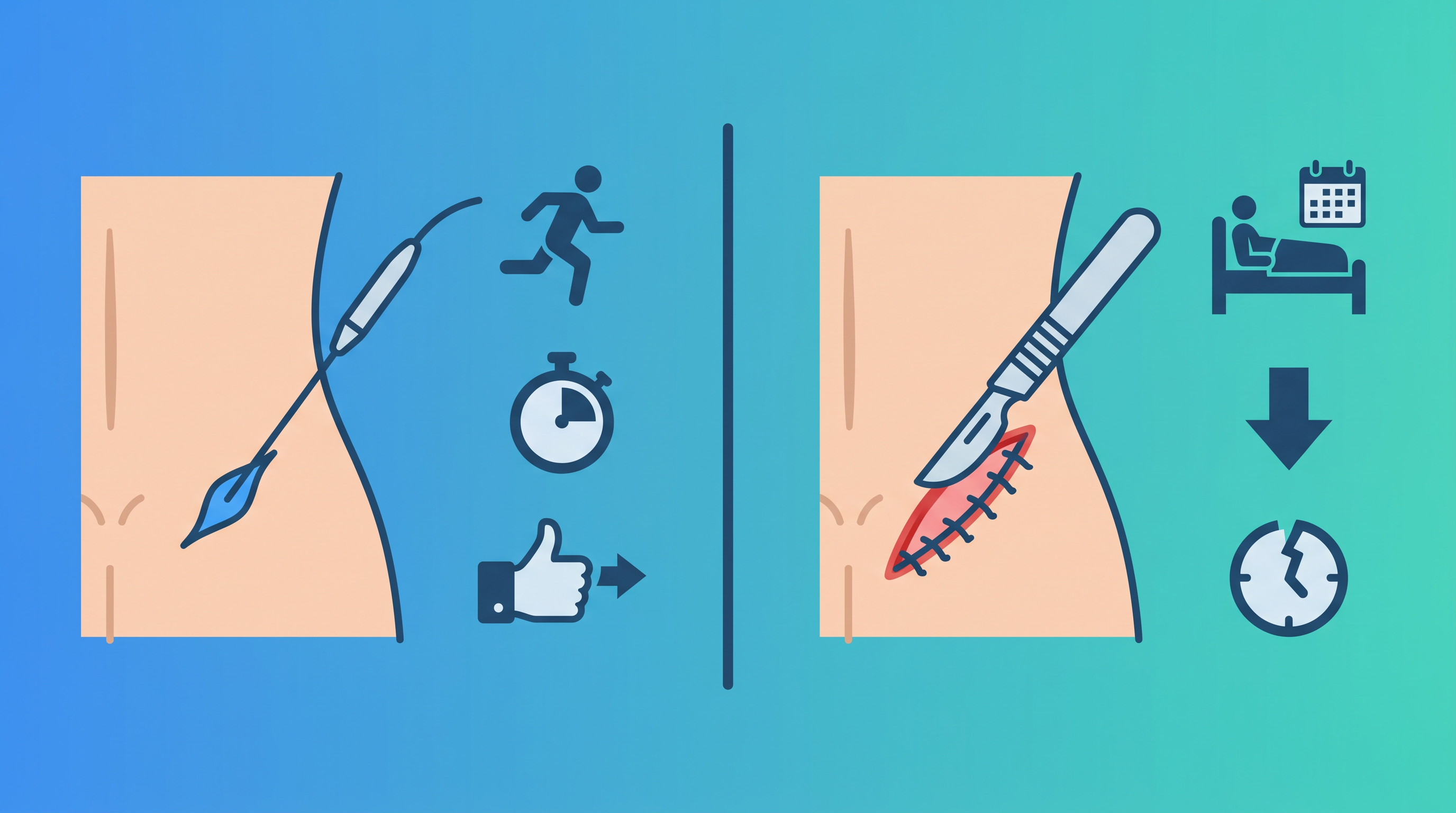
- Laser: Return to work in 3–5 days (median)
- Open surgery: Return to work in 14–28 days (median)
Pain scores (VAS 0–10):
- Laser: 2.1 ± 0.8 at 24 hours
- Open surgery: 5.4 ± 1.2 at 24 hours
Why Laser Treatment Has Lower Recurrence
Laser treatment leaves no wound, so there is no flat surface for hairs to re-enter. It also preserves the natal cleft anatomy and can treat multiple tracts in a single session.
Who Benefits Most
Laser treatment is particularly advantageous for IT professionals, students, athletes, patients with recurrent disease, and patients anxious about large wounds.
Book a consultation to find out if laser treatment is right for your case.