
Pilonidal Sinus Symptoms: When to See a Doctor Immediately
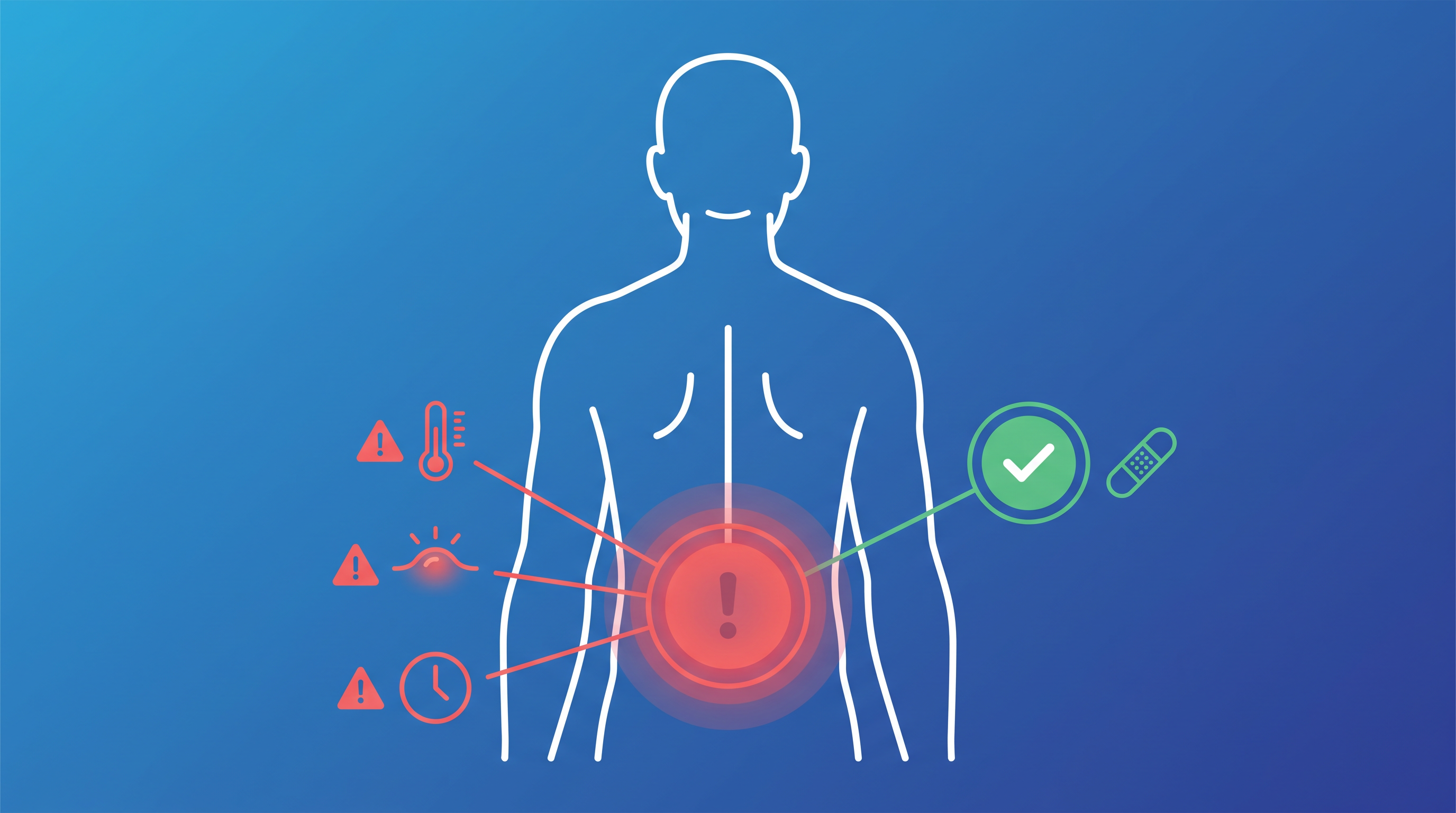
Common symptoms include pain near the tailbone, swelling, redness, and discharge. Seek immediate care if you have fever, severe pain, or spreading redness — these are signs of serious infection. Early treatment prevents complications.
Pilonidal sinus symptoms can range from a painless dimple to a severely infected abscess. Knowing the warning signs helps you get treatment at the right time — before a simple condition becomes a serious infection.
Seek Emergency Care For These Symptoms
🚨 Call 108 or go to the emergency room immediately if you have high fever (above 38.5°C) with severe tailbone pain, rapidly spreading redness, or feel very unwell — these are signs of sepsis or severe cellulitis.
Seek urgent care if you have:
- •Fever above 38°C with tailbone pain
- •Rapidly spreading redness or warmth
- •Severe pain that prevents sitting or walking
- •Pus or foul-smelling discharge
- •Feeling very unwell, shaking, or confused
In Bangalore: Call 108 for emergencies or visit your nearest hospital.
Early Warning Signs
Many people with pilonidal sinus first notice a small dimple or pit near the top of the crease between their buttocks. This may cause no symptoms at all initially, or just mild discomfort when sitting for long periods.
Early signs to watch for:
- A small hole, pit, or dimple near the tailbone
- Mild tenderness or discomfort when sitting
- Occasional small amounts of clear fluid
- A small, firm lump under the skin
Signs of Infection (Acute Abscess)
When the sinus becomes infected, symptoms escalate rapidly. An acute abscess is a medical condition that requires prompt attention.
Signs of acute infection:
- Sudden, severe pain near the tailbone
- Swelling and redness around the area
- Warmth to the touch
- Pus, blood, or foul-smelling discharge
- Fever and chills
- Difficulty sitting or walking
Chronic Pilonidal Sinus Symptoms
Some patients develop chronic pilonidal sinus, where the condition persists with recurring flare-ups. Symptoms include recurring pain that comes and goes, intermittent discharge from one or more openings, skin irritation and scarring around the area, and multiple sinus openings (complex disease).
How Symptoms Differ from Other Conditions
Pilonidal sinus is sometimes confused with other conditions. Unlike a regular boil (furuncle), pilonidal sinus is located specifically near the tailbone. Unlike hemorrhoids, it does not cause rectal bleeding. Unlike hidradenitis suppurativa, it is typically a single area rather than multiple sites.
When the sinus becomes infected, symptoms escalate rapidly. An acute abscess is a medical condition that requires prompt attention.
Signs of acute infection:
- Sudden, severe pain near the tailbone
- Swelling and redness around the area
- Warmth to the touch
- Pus, blood, or foul-smelling discharge
- Fever and chills
- Difficulty sitting or walking
Chronic Pilonidal Sinus Symptoms
Some patients develop chronic pilonidal sinus, where the condition persists with recurring flare-ups. Symptoms include recurring pain that comes and goes, intermittent discharge from one or more openings, skin irritation and scarring around the area, and multiple sinus openings (complex disease).
How Symptoms Differ from Other Conditions
Pilonidal sinus is sometimes confused with other conditions. Unlike a regular boil (furuncle), pilonidal sinus is located specifically near the tailbone. Unlike hemorrhoids, it does not cause rectal bleeding. Unlike hidradenitis suppurativa, it is typically a single area rather than multiple sites.
Pilonidal sinus is sometimes confused with other conditions. Unlike a regular boil (furuncle), pilonidal sinus is located specifically near the tailbone. Unlike hemorrhoids, it does not cause rectal bleeding. Unlike hidradenitis suppurativa, it is typically a single area rather than multiple sites.
Medical References & Sources
- [1]Pilonidal Cyst: Symptoms and Causes. Mayo Clinic, 2023. View source ↗
- [2]Pilonidal Sinus. NHS, 2022. View source ↗

Dr. Adarsh M. Patil
MS, FMAS — Pilonidal Sinus Specialist, Bangalore
Consult Dr. Adarsh M. Patil — Pilonidal Sinus Specialist
Discuss laser and surgical options, likely recovery, costs, and next steps after an individual assessment.