
What Is Pilonidal Sinus Disease? A Patient's Complete Guide
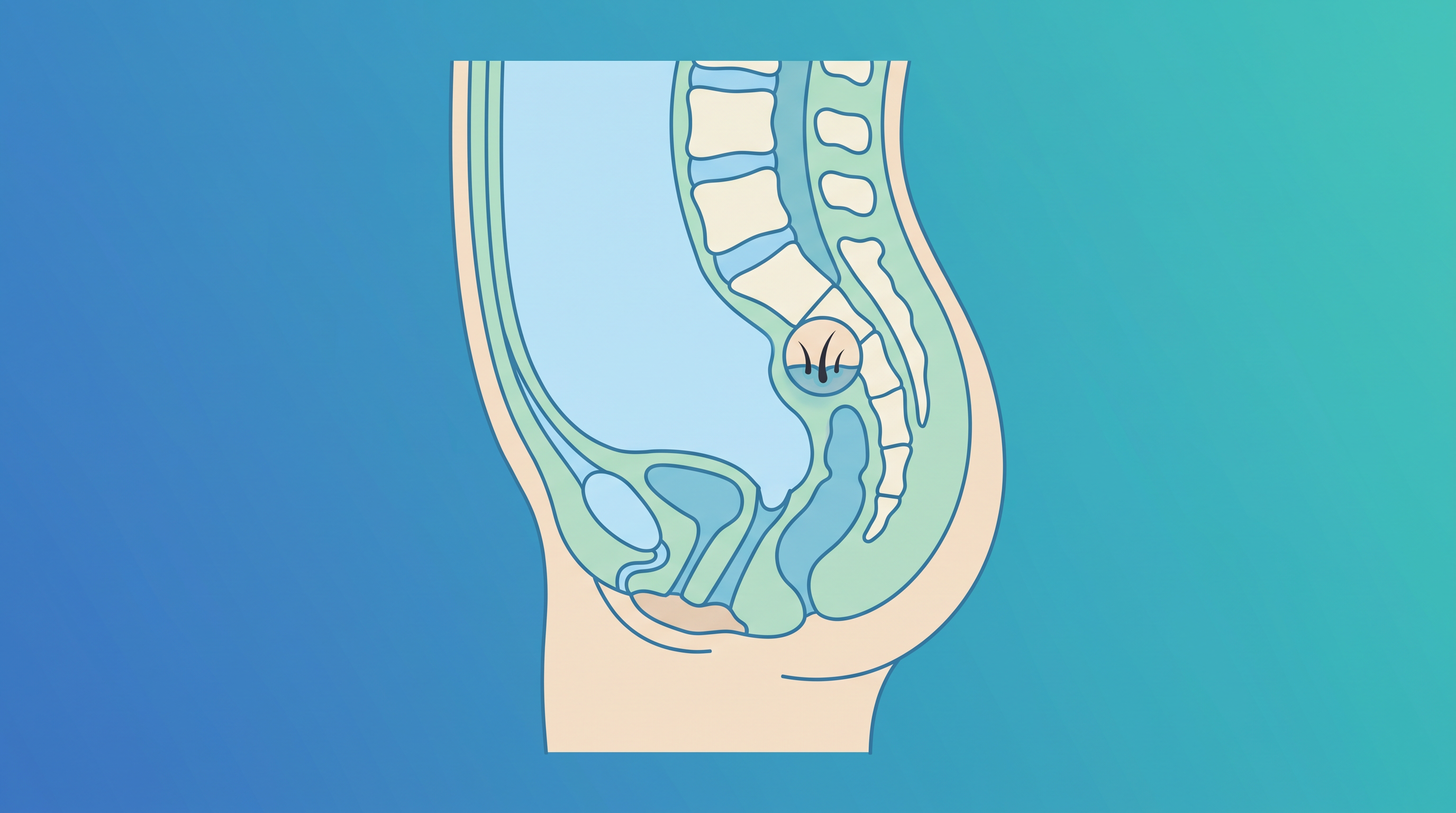
Pilonidal sinus is a small hole or cyst near the tailbone that can become infected, causing pain and discharge. It mostly affects young adults aged 15–35, especially those who sit for long periods. It is treatable with laser surgery or conventional procedures, with a 99% success rate.
If you've noticed pain, swelling, or discharge near the top of your buttocks crease, you may have a pilonidal sinus. This guide explains what it is, why it happens, and what you can do about it — in plain, everyday language.
When to See a Doctor Immediately
🚨 Go to the Emergency Room if you have fever above 38.5°C, rapidly spreading redness, or feel very unwell — these are signs of serious infection (cellulitis or sepsis).
Seek urgent care if you have:
- •Fever or chills alongside tailbone pain
- •Rapidly spreading redness or warmth around the area
- •Severe pain that is getting worse quickly
- •Pus or foul-smelling discharge
- •Difficulty sitting or walking due to pain
In Bangalore: Call 108 for emergencies or visit your nearest hospital.
Why Does Pilonidal Sinus Develop?
Pilonidal sinus disease develops when loose hairs penetrate the skin near the tailbone (coccyx) and become embedded. Your body treats these hairs as foreign objects, triggering an immune response that creates a small tunnel or cyst in the skin.
Who is most at risk?
- Young adults aged 15–35 years
- People who sit for long periods (drivers, office workers, students)
- Those with thick, coarse, or curly body hair
- People who are overweight or obese
- Those with a deep natal cleft (the crease between the buttocks)
What Does Pilonidal Sinus Feel Like?
The symptoms vary depending on whether the sinus is infected. Without infection, you may notice a small dimple or pit near the tailbone with mild discomfort when sitting. With acute infection (abscess), you may experience sudden, severe pain, swelling, redness, warmth, pus or blood-stained discharge, and fever in severe cases.
How Is It Diagnosed?
Diagnosis is straightforward and usually requires only a physical examination. Dr. Adarsh M. Patil will examine the area visually and by touch, ask about your symptoms and medical history, and in complex cases, order an MRI or ultrasound to map the sinus tracts.
What Are the Treatment Options?
Treatment depends on the severity of your condition. Laser treatment (FiLaC/SiLaC) is ideal for first-time uncomplicated cases with 1–2 week recovery and 99% success rate. Open surgery is best for complex or recurrent cases with 2–4 week recovery. Flap surgery (Limberg/Karydakis) is recommended for recurrent cases with 2–3 week recovery and 97% success rate.
Can Pilonidal Sinus Heal on Its Own?
No. Pilonidal sinus disease does not resolve without treatment. Without intervention, infections will recur and worsen over time, the sinus tracts can expand and become more complex, and rare but serious complications like sepsis can develop. Early treatment leads to better outcomes and simpler procedures.
The symptoms vary depending on whether the sinus is infected. Without infection, you may notice a small dimple or pit near the tailbone with mild discomfort when sitting. With acute infection (abscess), you may experience sudden, severe pain, swelling, redness, warmth, pus or blood-stained discharge, and fever in severe cases.
How Is It Diagnosed?
Diagnosis is straightforward and usually requires only a physical examination. Dr. Adarsh M. Patil will examine the area visually and by touch, ask about your symptoms and medical history, and in complex cases, order an MRI or ultrasound to map the sinus tracts.
What Are the Treatment Options?
Treatment depends on the severity of your condition. Laser treatment (FiLaC/SiLaC) is ideal for first-time uncomplicated cases with 1–2 week recovery and 99% success rate. Open surgery is best for complex or recurrent cases with 2–4 week recovery. Flap surgery (Limberg/Karydakis) is recommended for recurrent cases with 2–3 week recovery and 97% success rate.
Can Pilonidal Sinus Heal on Its Own?
No. Pilonidal sinus disease does not resolve without treatment. Without intervention, infections will recur and worsen over time, the sinus tracts can expand and become more complex, and rare but serious complications like sepsis can develop. Early treatment leads to better outcomes and simpler procedures.
Treatment depends on the severity of your condition. Laser treatment (FiLaC/SiLaC) is ideal for first-time uncomplicated cases with 1–2 week recovery and 99% success rate. Open surgery is best for complex or recurrent cases with 2–4 week recovery. Flap surgery (Limberg/Karydakis) is recommended for recurrent cases with 2–3 week recovery and 97% success rate.
Can Pilonidal Sinus Heal on Its Own?
No. Pilonidal sinus disease does not resolve without treatment. Without intervention, infections will recur and worsen over time, the sinus tracts can expand and become more complex, and rare but serious complications like sepsis can develop. Early treatment leads to better outcomes and simpler procedures.
Medical References & Sources
- [1]Pilonidal Disease. Mayo Clinic, 2023. View source ↗
- [2]Pilonidal Sinus Disease. National Health Service (NHS), 2022. View source ↗

Dr. Adarsh M. Patil
MS, FMAS — Pilonidal Sinus Specialist, Bangalore
Consult Dr. Adarsh M. Patil — Pilonidal Sinus Specialist
Discuss laser and surgical options, likely recovery, costs, and next steps after an individual assessment.